Ebook Free Seismic Design of Building Structures, 11th Ed
Be part of those who enjoy to read this publication. If you are the beginner reader, you could utilize this publication as temptation for you to minimally like analysis. Also this publication is composed by a specialist author, it does not imply that words are extremely challenging to comprehend. You could take some lessons as well as experiences from Seismic Design Of Building Structures, 11th Ed based upon what you require. This is what calls as advantages of publication by reading. Now, get this publication right here and also now. It will be offered in the site connect to visit.
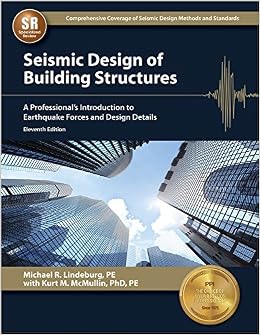
Seismic Design of Building Structures, 11th Ed

Ebook Free Seismic Design of Building Structures, 11th Ed
Seismic Design Of Building Structures, 11th Ed. Let's review! We will typically discover this sentence all over. When still being a childrens, mother used to order us to constantly read, so did the teacher. Some books Seismic Design Of Building Structures, 11th Ed are completely read in a week and also we require the obligation to support reading Seismic Design Of Building Structures, 11th Ed What about now? Do you still love reading? Is reading only for you which have responsibility? Definitely not! We below provide you a new publication entitled Seismic Design Of Building Structures, 11th Ed to review.
This is why we recommend you to consistently see this resource when you require such book Seismic Design Of Building Structures, 11th Ed, every book. By online, you might not go to get the book store in your city. By this online collection, you can locate the book that you really wish to read after for very long time. This Seismic Design Of Building Structures, 11th Ed, as one of the advised readings, tends to be in soft documents, as all of book collections right here. So, you may also not await few days later on to receive as well as review the book Seismic Design Of Building Structures, 11th Ed.
You can gain guide by visiting to the link page of guide. It will not be understood when you don't download and install the application. And afterwards, you can store it to the gadget. You understand, as the created as well as advanced modern technology in these recent years, the tasks and all things can be done by applying or utilizing the modern technology. This is as what to do to obtain Seismic Design Of Building Structures, 11th Ed in the soft data. You should link to the web as a very common point today.
When getting Seismic Design Of Building Structures, 11th Ed as your reading resource, you might get the basic means to evoke or get it. It requires for you to pick as well as download the soft documents of this referred publication from the web link that we have supplied here. When everybody has actually that terrific sensation to read this book, she or the will always think that reviewing publication will constantly lead them to obtain better destination. Wherever the location is for life much better, this is just what most likely you will obtain when selecting this book as one of your reading resources in spending spare times.
About the Author
About the Author Michael R. Lindeburg, PE, is one of the best-known authors of engineering textbooks and references. His books and courses have influenced millions of engineers around the world. Since 1975, he has authored over 30 engineering reference and exam preparation books. He has spent thousands of hours teaching engineering to students and practicing engineers. He holds bachelor of science and master of science degrees in industrial engineering from Stanford University.About the Contributor Kurt M. McMullin, PhD, PE, is a professor of civil engineering at San Jose State University. Dr. McMullin holds master of science and doctorate degrees in civil engineering from the University of California at Berkeley. He has been published in many journals and his research interests involve the response of steel, concrete, and timber structures to earthquakes and other catastrophic events.
Read more
Excerpt. © Reprinted by permission. All rights reserved.
How to Use This Book If you are the type of person who never reads instructions, here are my “Quickstart” suggestions on how to get the most from Seismic Design of Building Structures during your exam preparation. 1. Get copies of the IBC and ASCE/SEI7 and their errata. 2. Start reading this book from the first chapter. Don’t skip around, because the book builds on concepts. 3. Read slowly; a page or two a day is plenty. Look up every code section in the referenced sources. 4. Work through all of the example and practice problems. 5. Put lots of tabs on the building code tables. 6. Use the indexes extensively. 7. Don’t forget to take it with you to your exam. Now, beyond those suggestions, how you will use this book depends on why you obtained it. Seismic Design was specifically written for engineering exam review. As the exams vacillated each year between areas of emphasis, the scope and depth of this book also increased. And so, this book now covers a lot of bases, and it can be used for other exams (e.g., SE and ARE) and general familiarity. However, even though its scope and depth have increased enormously over the years, I suspect this book will remain typecast in its leading role—that of an engineering exam review book. Therefore, I am writing this section assuming that you are using Seismic Design for that purpose. Although this book develops subjects gradually, gently, and linearly, it crams innumerable concepts onto every page. If you don’t have a seismic background, you’ll pretty much have to start at page one and work your way through the book, page by page. I don’t assume that you know anything. I’ve skipped almost all of the higher-order mathematics. And I’ve tried to write and edit the material to provide instruction that is intuitive. However, you’ll still need to go slowly.
Read more
Product details
Paperback: 268 pages
Publisher: Professional Publications, Inc.; 11 edition (October 21, 2014)
Language: English
ISBN-10: 1591264707
ISBN-13: 978-1591264705
Product Dimensions:
8.5 x 0.5 x 11 inches
Shipping Weight: 1.4 pounds
Average Customer Review:
4.2 out of 5 stars
14 customer reviews
Amazon Best Sellers Rank:
#1,072,405 in Books (See Top 100 in Books)
As a practicing I have found Michael Lindeburg's book simply invaluable. It spans the lecture room and the design office effortlessly. Reading the first three chapters was akin to a refresher course in tectonic geology. If I had to say something less charitable it would probably be the need for more connection and joint details to address the horrific shear generated at these points. Lastly, the cost. To me its a tax deductible, but to students on a tight budget it can be a nightmare, comparable to ground acceleration of 5 g's.
I have had minimal exposure to ELFP and the simplified static procedure in my undergrad. I have been taking the SEAOI review course for the SE exam and this book pairs very well with content, order, and pace. If you have had minimal exposure to seismic, this book is excellent in both learning the theory and code application. I will likely purchase the SEAOC manual for seismic design examples as the problems presented in here are OK. I would definitely recommend, but not as a complete stand-alone resource.
Clear, simple and to the point.
Very nice update to the old edition.
Great handbook with equations and explanations
Interesting book. Convenient to both systems of measurement SI and USA, with resolved problems.
This is text specifically tailored for anyone who will be taking the California Special Civil Seismic Principles Examination; nonetheless, it can also be a valuable resource for anyone preparing for the NCEES: SE exam. The first four chapters address the basics of earthquakes and vibration theory. For many, this will be a basic review (but do not mistake "basic" for "wasteful." Many test-takers neglect to review the basics and find themselves faced with simple questions that they can no longer answer with assurance. So, please do review these sections with care). The chapters which follow address standard structural designs as well as seismic-resistant structures of various materials.There are numerous, invaluable examples and problems in each chapter. The solutions to each are provided in the back of the text (in detail). Of equal importance, each illustration/figure is abundantly clear (leaving no question as to its purpose of degree of value). The editor and publisher has done their due diligence (ensuring that all readers will genuinely benefit from this text).Of equal value are the appendices. This area is both extensive and phenomenal for fast reference.While the price of the text is somewhat daunting, this is considerably less expensive than an online review course. Therefore, if one is self-motivated and talented (and anyone taking this exam, most assuredly, is), this text is a cost-efficient, (potentially) equally as beneficial alternative.Purchase this text and feel more confident/prepared for this exam. You will never regret it.
Seismic Design of Building Structures: A Professional’s Introduction to Earthquake Forces and Design Details is just that, an introduction and guide to the principles, methods, and standards for seismic design. Its primary purpose is to act as a study guide and review manual for the California Special Civil Seismic Principles Examination, NCEES Structural Engineering Examination, and the Architect Registration Examination and it is formatted so as to be an effective tool for open book examinations. While it acts as an entry point to seismic design, it does assume a basic understanding of civil engineering principles. However, each subject, starting with basic seismology and passing through general structural design and seismic-resistant structures, is established from the ground up, allowing for anyone with the desire to learn the principles of seismic design the opportunity to grasp each topic in turn.Extensive practice problems and tables, figures, and illustrations from the International Code Council’s International Building Code and American Society of Civil Engineers’ Minimum Design Loads for Building and Other Structures extends the usefulness of this handbook beyond that of a normal textbook. This is an insightful and well written guide that will be of great value long after the completion of the examination that instigated its purchase.
Seismic Design of Building Structures, 11th Ed PDF
Seismic Design of Building Structures, 11th Ed EPub
Seismic Design of Building Structures, 11th Ed Doc
Seismic Design of Building Structures, 11th Ed iBooks
Seismic Design of Building Structures, 11th Ed rtf
Seismic Design of Building Structures, 11th Ed Mobipocket
Seismic Design of Building Structures, 11th Ed Kindle

Tidak ada komentar :
Posting Komentar